


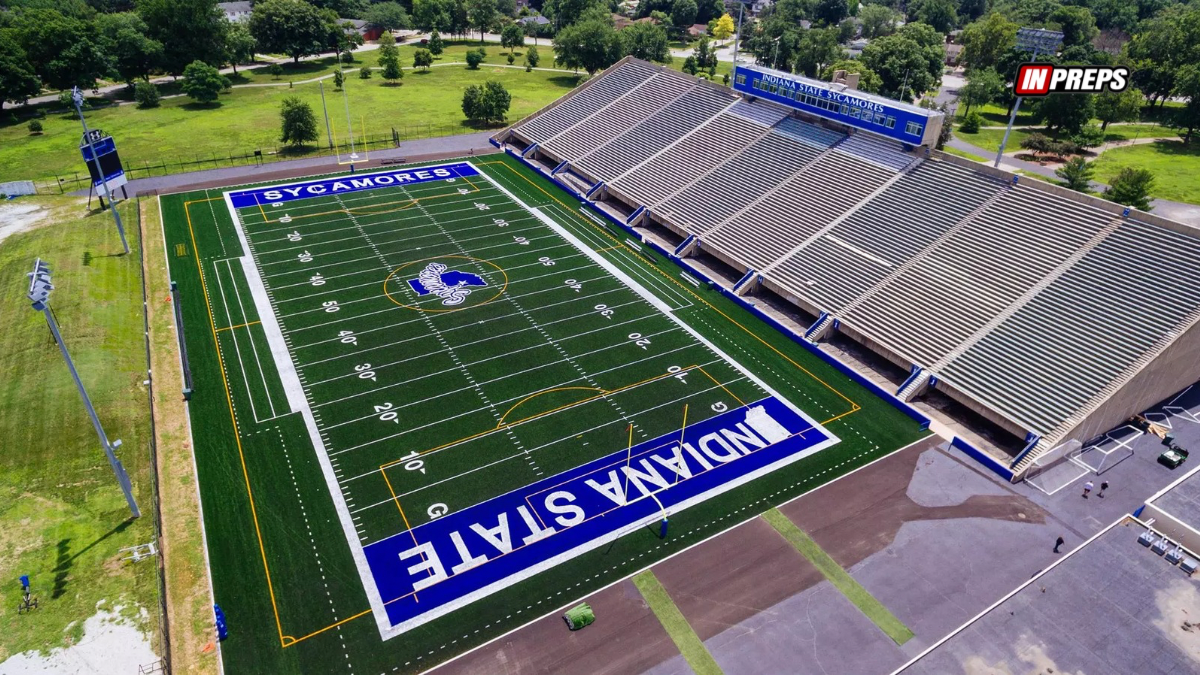
Curt Mallory is out after 10 seasons. The Sycamores’ turnaround starts in Indiana high school gyms, weight rooms and Friday nights, and only if the university invests to compete for those players.
Indiana State isn’t just looking for a football coach. It’s looking for someone who can win a recruiting war it has been losing in its own state.
The Sycamores ended Curt Mallory’s 10-year tenure Sunday, with athletic director Nathan Christensen saying “a change in leadership was necessary to move our football program forward.” The search that follows will be judged on wins in the Missouri Valley Football Conference. But the wins will come from somewhere specific: the Indiana high school players who should be in Terre Haute and aren’t.
The gap nobody is filling
Indiana recruiting has a tier problem. At the top, the Power 4 programs take the state’s elite prospects. Below them, Group of 6 programs pick through the next level. Then comes the Division II and NAIA tier, and that’s where Indiana State’s natural recruits keep ending up.
For several years, Marian, UIndy and Indiana Wesleyan have landed players who belong on an FCS roster. These aren’t players who missed. They’re players who chose a lower division because the experience on the other side looked better. Every year, Indiana produces a group of prospects built for the FCS level: too good for Division II, not quite in line for a Big Ten offer, and ready to start in the Missouri Valley. That group should be Indiana State’s foundation. Right now, it’s the program’s biggest leak.
The next coach has to identify that gap and close it. That means knowing which Indiana players fit the FCS profile before the small colleges lock them up, and building relationships with the high school coaches who develop them.
Facilities and NIL decide visits
The hard truth is that no coach can close that gap alone. When an NAIA program like Indiana Wesleyan can win a recruiting visit on facilities, the problem isn’t the pitch. It’s the building.
Indiana State plays in the best conference in the FCS, and its football facilities don’t match that standard. Recruits notice. Their parents notice. A player choosing between Terre Haute and a Division II or NAIA school with newer facilities and a cleaner path to the field is making a reasonable decision, and he’ll keep making it until Indiana State gives him a reason not to.
The same is true for NIL. The next coach will be competing for players who have options at every level, and an NIL budget that can’t compete is just another reason to say no. A real investment from the athletic department in facilities and NIL is the only way the program turns around. Without it, Indiana State is asking a new coach to win the Missouri Valley with one hand tied behind his back.
Redraw the recruiting map
Where Indiana State recruits matters as much as how it recruits. The Sycamores’ roster leans toward southern Indiana. That region is worth protecting, but it can’t be the whole map.
Indianapolis is the state’s deepest talent pool, and it’s about an hour from campus. The next staff needs to recruit the city harder and earn trust with its high school programs, its 7-on-7 circuits and its training networks. The Region and Northwest Indiana are just as important. Those programs produce physical, well-coached players every season, and too few of them land in Terre Haute. A staff that commits to Indianapolis and the Region could raise the talent level right away.
Indiana State has been one of the state’s most important college landing spots. When the Sycamores played at IU last season, they carried 63 Indiana players on their roster. The question isn’t whether the program recruits Indiana. It’s whether it recruits the right Indiana players and wins them against everyone else chasing the same group.
Terre Haute can win
There’s proof that it can be done. Indiana State baseball turned into a consistent winner under Mitch Hannahs, who went 355-214-1 over 11 seasons with seven 30-win campaigns. That program didn’t win by being somewhere else. It won by building something in Terre Haute that players wanted to be part of.
Football has further to go. Not long ago, the program was on the verge of collapse. Mallory’s tenure produced a 2018 MVFC Coach of the Year honor and a few national award finalists, but never a consistent winner. The next coach inherits a program in the best FCS conference in the country, an hour from Indianapolis, in a state full of players it should be signing.
That’s the opportunity. Whether Indiana State takes it depends on two hires: the coach, and the commitment behind him.







Leave a Reply