

Indiana Preps | The State / Opinion
Something is happening in central Indiana that goes beyond winning sectionals and producing Division I recruits. It is bigger than any single program, any single season, any single class of athletes. It is structural. It is economic. And it is accelerating faster than most people have stopped to examine.
Central Indiana is becoming a volleyball hub. Not just a good volleyball region — a hub. The kind of place where the sport connects at every level simultaneously, where infrastructure feeds visibility, visibility feeds investment, and investment feeds more infrastructure. The kind of place that other markets study and try to replicate.
The question worth asking is whether that is entirely a good thing.
What Is Being Built
Start with what’s already in place and what’s coming.
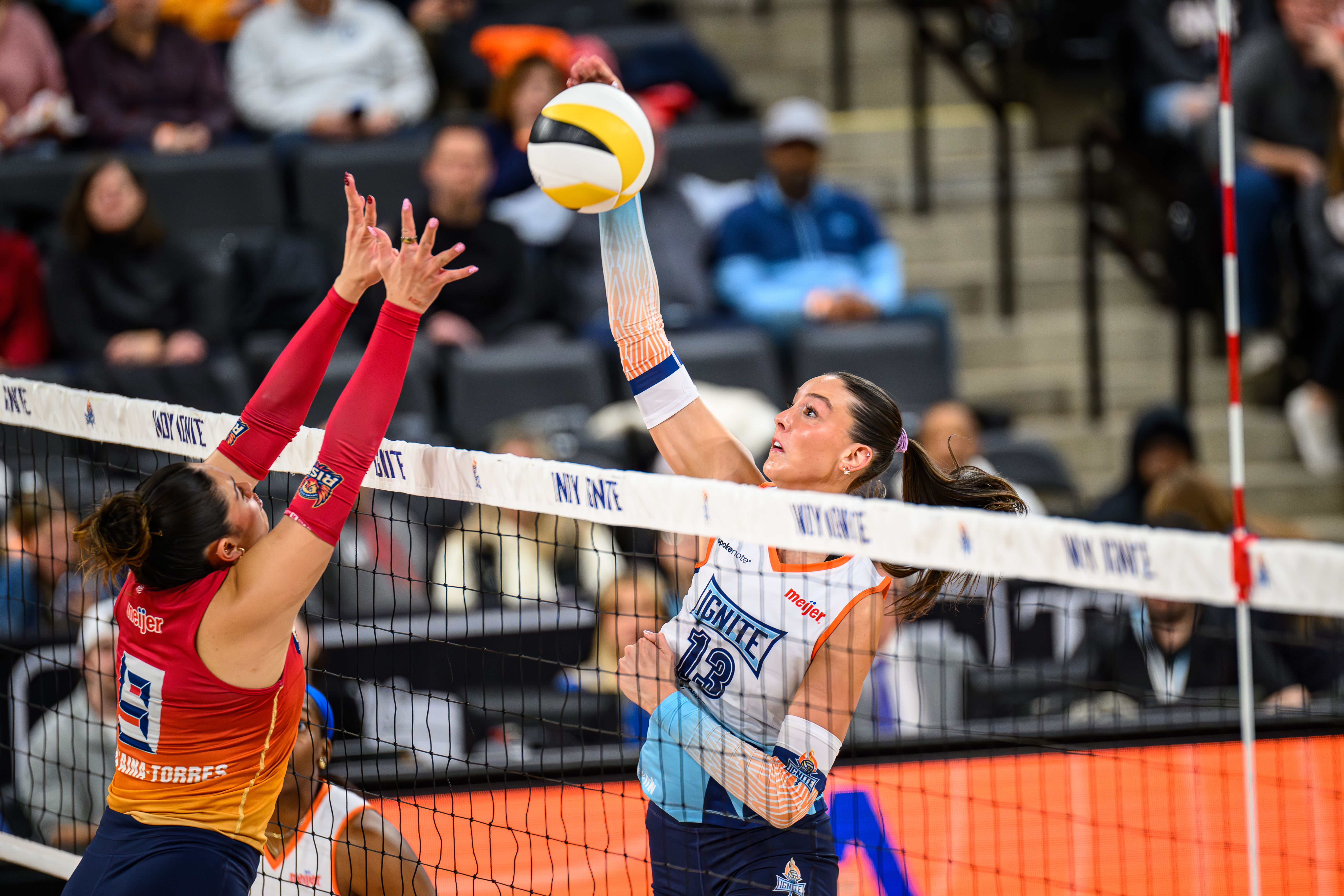
The Fishers Event Center — part of a $550 million expansion to the Fishers District — seats up to 7,500 people and has quickly become one of the most active volleyball venues in the Midwest. The Indy Ignite, which debuted in 2025 and reached the championship series in their first season , play all 14 of their home matches there. Their opening game drew a sell-out crowd of 7,000. Demand for tickets is real.
That’s the professional layer. Below it, Indiana’s club volleyball infrastructure is among the most developed in the country — Hamilton County programs in particular have built national reputations. Hamilton Southeastern has won back-to-back Indiana state championships and been recognized as a nationally ranked program. The high school pipeline that feeds those clubs and produces Division I talent is well-established and growing.
Now add what’s still coming. The Fishers Event Center will host the inaugural Big Ten Volleyball Tournament in November 2026 — the first postseason tournament in Big Ten Conference volleyball history — with the top 15 teams in the standings competing for the conference championship. That’s a national event, in a suburb of Indianapolis, at a venue that has been open for less than two years.
The stack looks like this: club programs feeding high school programs feeding college recruiting pipelines, with a professional team providing visibility and aspiration at the top, all anchored by a modern facility that is now attracting major conference events. “Central Indiana is an undeniable hotbed for both men’s and women’s volleyball, where thousands of talented athletes first learn to love the game,” as Ignite ownership put it at the team’s launch.
That is not spin. That is an accurate description of what exists here.
What The Growth Creates
For athletes inside the system, the opportunities are genuinely expanding. A young player in Hamilton County today can train at a nationally competitive club, play for one of the top high school programs in the state, watch professional players at a ten-minute drive from her house, and realistically aspire to play at a level that her counterpart in a smaller market cannot access in the same way.
The economic effects ripple outward too. Tournament traffic at venues like the Fishers Event Center and Grand Park means hotels, restaurants, parking, and local spending on a scale that matters to the communities hosting these events. Indianapolis has built its entire sports economy around this model — the ability to host events that bring people from across the region, the state, and the country into one place. Volleyball fits that model cleanly.
The Ignite have been deliberate about connecting to the grassroots. Their home court announcement brought club and high school teams from across the Indianapolis region into the room , and the framing from ownership has consistently positioned the team as something built for Indiana’s volleyball community, not just for the professional market. That intention matters, even if intention and outcome don’t always land in the same place.
What The Growth Costs
Here is where the conversation gets more complicated.
Club volleyball in central Indiana is not inexpensive. It has never been inexpensive. But as the infrastructure around the sport expands and the competitive level rises, the cost of participating at the level required to access the visibility this ecosystem provides has been rising with it. Travel. Tournament fees. Training. Equipment. Coaching. The price of staying competitive in a system that is becoming more sophisticated every year.
For families with the resources to be fully inside that system, the opportunity is exceptional. For families on the margins — the ones making difficult choices about which activities their kids can afford, the ones for whom a travel tournament weekend means real financial strain — the calculus is different. The sport’s growth does not automatically translate into broader access. In some cases, it does the opposite.
This is not unique to volleyball or to central Indiana. It is the tension that exists in every sport that becomes professionalized at the youth and amateur level. Baseball, basketball, lacrosse — every sport that has built a club infrastructure around visibility and recruiting has grappled with the same question: when you build a better ecosystem, who gets to be inside it?
The Ignite have a Kids Club. Grand Park continues to draw tournaments that fill hotels across Hamilton County. The Big Ten is coming in November. The sport is growing in ways that were unimaginable here a decade ago.
But the gym fees are real. The travel costs are real. The gap between the families who can afford the best clubs and the families who cannot is real. Growth that only benefits the people who can already afford to be in the room is not the same as growth that expands the game.
The Question Worth Asking
Central Indiana’s volleyball ecosystem is genuinely impressive. The Fishers Event Center is a world-class facility. The Ignite are building something that matters for the sport’s long-term visibility in this market. The Big Ten coming to Fishers is a statement about where this region sits in the national volleyball conversation.
But the sport’s best version of itself — in this region and everywhere else — is one where a kid from Greenwood has the same shot as a kid from Fishers. Where access to training, competition, and visibility isn’t entirely a function of what a family can afford. Where the infrastructure being built creates more pathways, not just better ones for the families already inside the system.
Central Indiana has built something worth celebrating. The harder work is making sure the door stays open for everyone.
Indiana Preps covers high school athletics, recruiting, and athlete development across the state of Indiana.








Leave a Reply